

 Jun 15,2026
The Hidden Risks Inside a Cooling Loop
In the push to adopt liquid cooling, data center operators and integrators focus heavily on cold plates, pumps, heat exchangers and coolant chemistry. But three types of components often receive less attention than they deserve — valves, filters and bellows — even though they directly affect system reliability, maintenance costs and uptime. In liquid cooling loops, failure is rarely catastrophic; it is often gradual, starting with a pinhole leak, a clogged filter, or a cracked bellow that introduces particles into the loop. Those small failures then degrade overall system performance or require expensive unplanned service calls.
The Case for Zero-Leakage Integrated Welded Valves
Traditional flange-connected or threaded valves rely on gaskets and bolted joints that can loosen over time under thermal cycling and pump vibration. In liquid-cooled data centers, where pumps run 24/7 and fluid temperatures vary across the day, vibration and thermal expansion are constant. Over time, microscopic gaps can open, leading to slow external leaks — the kind that degrade coolant levels, leave residues and create long-term reliability headaches.
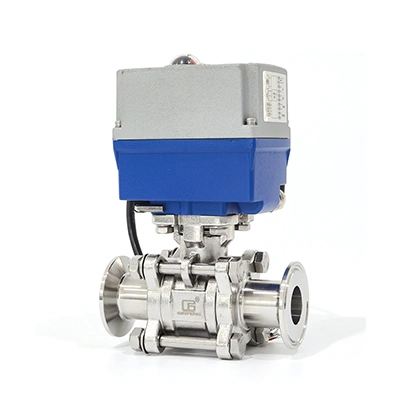
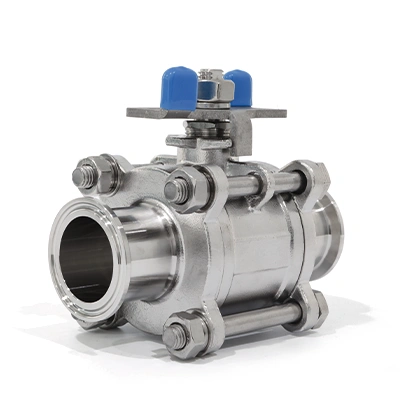
Integrated welded valves address this vulnerability directly. By eliminating bolted flange connections on the valve body, these valves remove multiple potential leak paths. Industry research confirms that the transition to advanced liquid cooling is driving adoption of valves that enable system maintenance while operating during high-density working hours, with the butterfly valves segment projected to grow at the highest CAGR of 33.3% from 2025 to 2032. Beyond zero leakage, a well-designed butterfly valve also supports online maintenance — allowing service technicians to close the valve, remove a flange and repair a branch line without draining the main loop. For 24/7 data center operations, that means less scheduled downtime and lower operational disruption.
Why Filter Cleanability Directly Affects Operating Costs
Liquid cooling loops are not closed to contamination. Particles from component wear, residual debris from installation, or even the breakdown of seals over time can circulate through the system. These particles, if not removed, accumulate in cold-plate microchannels and heat exchangers, degrading thermal transfer efficiency and increasing pumping power requirements. This is where filter design becomes critical. Single-layer disposable filters may need to be replaced every three months, which drives up both component and labor costs.
Sintered mesh filters offer an alternative that aligns better with long-term operating budgets. A typical sintered mesh filter uses a five-layer structure — a protection layer, a filtration layer, a distribution layer and two support layers — that provides both high filtration accuracy and mechanical strength. Because the filtration mechanism is surface-based rather than depth-based, trapped particles can be removed by backflushing or ultrasonic cleaning. This clean-and-reuse capability means lower total cost of ownership and less waste, an increasingly important sustainability consideration for large-scale deployments.
Bellows as the Unsung Heroes of Thermal Compensation
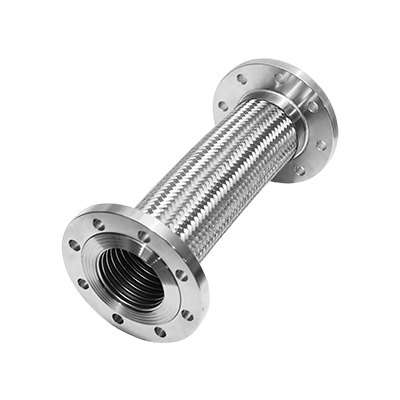
Data center cooling loops experience not only vibration but also thermal expansion and contraction as coolant temperatures fluctuate. Hard-piped systems without flexible compensation elements can transmit these expansion forces to valves, pumps and cold plates, creating stress that eventually leads to fatigue cracking or gasket failure. Metal corrugated bellows, strategically placed between the cold plate and fixed piping, absorb both thermal displacement and vibration. For high-stress applications, electropolishing the internal surfaces of these bellows eliminates micro-cracks that could otherwise propagate under cyclic pressure, significantly extending fatigue life.
The Importance of Helium Leak Testing for Long-Term Reliability
None of the above design features matter unless components are verified at the factory. The liquid cooling industry has increasingly adopted helium leak testing as the gold standard for verifying component integrity. Helium vacuum method detectors can detect leak rates in the range of E-12 mbar·l/s, ensuring not only liquid tightness but also gas tightness — a critical measure for long-term reliability. Suppliers who apply helium leak testing to every valve, filter and coupling — not just occasional samples — provide data-backed assurance that components will perform as intended for years.
Tune In to Hear How Component Choices Drive System Reliability
For a deeper technical discussion on valves and filtration in liquid cooling systems, we recommend episodes of "Cooling the Cloud: Innovation at the Heart of Data Centers" by Trane Technologies, where experts discuss how cooling technologies are transforming digital infrastructure. Industry technical blogs and OEM application guides also offer valuable insights into material selection, pressure ratings and fluid compatibility. For Qinfeng’s specific product capabilities — including integrated welded butterfly valves, sintered mesh filters and electropolished metal bellows — please visit our product pages or contact our engineering team for application-specific guidance and helium leak test reports.