

 Jul 28,2026
When specifying a butterfly valve for critical isolation points in a data center liquid cooling piping system, the choice between one-piece and two-piece designs has real consequences for long-term reliability.
Most butterfly valves look similar on the surface. Same quarter-turn operation, same basic function. But what happens inside—and how the valve is built—determines whether it delivers years of trouble-free service or becomes a source of leaks, maintenance headaches, and costly downtime.
For data center cooling loops, where uptime is non-negotiable, a welded one-piece butterfly valve offers distinct advantages that go beyond basic specifications. Understanding what sets this design apart matters more than comparing price tags.
Zero-Leakage Isolation Through Welded Construction
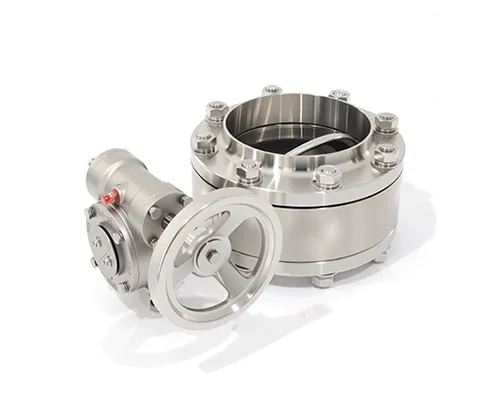
The fundamental difference lies in the body construction. A two-piece butterfly valve consists of two halves bolted together, with gaskets or O-rings sealing the joint between them. A welded one-piece butterfly valve features a body that is argon arc welded into a single integrated structure, eliminating that bolted joint entirely.
This matters because a bolted joint is a potential leak path. Over time, thermal cycling, vibration, and pressure fluctuations can cause gaskets to relax or seals to degrade. In data center liquid cooling systems, where temperature swings are common and coolant integrity is critical, that joint becomes a weak point.
A one-piece welded butterfly valve eliminates that risk entirely. There is no joint to fail, no gasket to replace, no bolted connection to retorque during maintenance. The body is a single, continuous structure that achieves bubble-tight shutoff—zero visible leakage when tested to standards like EN 12266-1 Leakage Rate A or API 598.
Inline Maintenance Without System Shutdown
Data center operators measure uptime in nines. Any activity that requires draining a cooling loop or taking a CDU offline is met with resistance. This is where a welded one-piece butterfly valve provides a significant operational advantage.
The one-piece design allows you to isolate a branch line by simply closing the valve disc, then remove the downstream piping components for service—all while the main cooling loop remains pressurized and operational. No system drain-down, no downtime, no secondary leakage risk.
Contrast this with conventional designs that may require full loop shutdown for valve service or replacement. The ability to perform inline maintenance without interrupting the rest of the system translates directly to higher system availability and lower operational costs.
Long-Term Reliability in Demanding Conditions
Data center liquid cooling systems present a challenging environment for any valve. Coolant temperatures cycle, flow rates vary, and the valve may sit in a partially open position for extended periods. These conditions test both the sealing integrity and the mechanical durability of the valve.
A welded one-piece butterfly valve addresses these challenges through its continuous metal structure and precision alignment. The welding process creates a body without gaps, crevices, or joint surfaces, eliminating potential sites for corrosion initiation. The one-piece disc and shaft design removes pins or mechanical connections that could wear over time.
The result is a butterfly valve that maintains its performance characteristics over a longer service life, with less frequent intervention required. For data center operators, this means fewer maintenance events, lower spare parts inventory, and predictable long-term operation.
What to Take Away
Choosing a butterfly valve for a data center liquid cooling piping system is about more than matching port sizes and pressure ratings. It's about ensuring your cooling infrastructure operates reliably, maintains its integrity over years of service, and gives you the flexibility to perform maintenance without compromising uptime.
Here's what to remember:
- Zero leakage through welded one-piece construction that eliminates bolted joint failure points
- Inline maintenance capability allows branch isolation without full system shutdown
- Long-term reliability through continuous metal structure and robust sealing design
Ready to Specify the Right Butterfly Valve for Your Data Center Cooling Loop?
Whether you're designing a new liquid cooling system or upgrading an existing one, the choice of butterfly valve has a lasting impact on performance, maintenance costs, and system reliability. Our team can help you evaluate your specific requirements—flow rates, coolant type, piping configuration, and space constraints—and recommend the right welded one-piece butterfly valve for your application.