

 Sep 01,2026
If you manage a liquid cooling system—whether for data centers, energy storage, or industrial process cooling—you already know that particulate contamination is a constant threat. Sand, weld slag, pipe scale, and corrosion debris inevitably find their way into closed loops. Left unchecked, these particles erode pump impellers, foul heat exchanger surfaces, and jam control valves.
The conventional solution is a strainer. But the problem with most standard R‑strainers is that cleaning them becomes a project. You shut down the system, isolate the section, hunt for the right wrenches, wrestle with corroded bolts, remove the cover, pull the screen, clean it, reassemble, and pray the gasket still seals. What should take fifteen minutes often consumes an hour or more.
That is precisely where a Stainless Steel R‑Strainer with a quick‑open design changes the equation.
What Makes a Quick‑Open Stainless Steel R‑Strainer Different
A conventional R‑strainer secures its cover with a ring of bolts—typically four to eight depending on the size. Each bolt must be loosened, removed, and later torqued back to specification. In a system that requires frequent cleaning—say, every few weeks—that repetitive bolt work adds up to significant labor hours over a year.
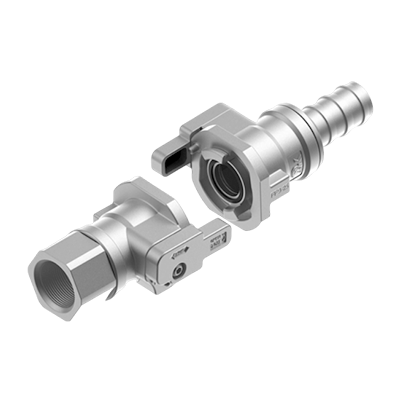
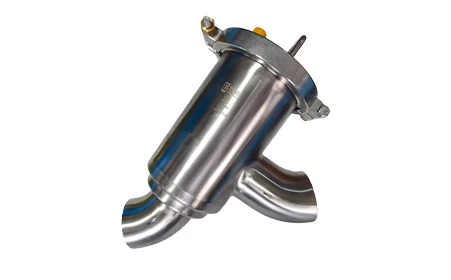
A quick‑open Stainless Steel Y‑Strainer, by contrast, uses a clamp mechanism or a hinged cover with a single locking device. You release the clamp, swing or lift the cover open, and the filter element is right there—no tools required. Access takes seconds, not minutes. Reassembly is equally fast.
The difference is not subtle. For a technician servicing a strainer that needs cleaning every two weeks, saving twenty minutes per service translates to over eight hours of labor saved annually per strainer. In a facility with dozens of strainers, that is real money.
Where the Time Savings Actually Come From
The obvious saving is the time spent turning bolts. But the real advantage of a quick‑open Stainless Steel R‑Strainer runs deeper.
First, there is the elimination of tool dependency. When the cover is bolted, someone must locate the correct socket or wrench. In a busy maintenance workshop, tools walk away. Time is wasted searching. A quick‑open clamp requires nothing but a pair of hands. The technician walks up to the strainer and opens it.
Second, there is the gasket factor. Bolted covers compress gaskets unevenly if torque is not perfectly uniform. Over-tighten one side, and the gasket distorts. Under-tighten another, and you get a leak. Replacing a damaged gasket adds time and inventory cost. Quick‑open designs typically use an O‑ring seated in a precision groove. The clamp applies even pressure across the entire sealing surface. The gasket lasts longer, and leaks are far less common.
Third, and perhaps most importantly, quick‑open access encourages more frequent inspection. When cleaning a strainer is a hassle, maintenance teams tend to postpone it. They wait until the pressure differential rises, or worse, until a downstream component fails. By then, the screen is heavily loaded, cleaning takes longer, and the system has been running inefficiently for weeks. A Stainless Steel Y‑Strainer that opens in seconds makes routine inspection painless. There is no excuse to skip it. The result: cleaner screens, lower pressure drops, and fewer unexpected breakdowns.
The Hidden Cost of Downtime
In a liquid cooling system, downtime is expensive. For a data center, every minute of unplanned cooling interruption risks thermal throttling or hardware damage. For an energy storage system, a halted cooling loop can degrade battery performance. For industrial processes, lost production time is measured in thousands of dollars per hour.
When you factor in the cost of downtime, the price difference between a bolted-cover Y‑strainer and a quick‑open model becomes irrelevant. The quick‑open version pays for itself the first time it prevents an extended shutdown.
Consider a typical maintenance scenario. A bolted‑cover R‑strainer requires isolation, cover removal, screen extraction, cleaning, reassembly, and leak testing. Even for an experienced technician, this is a thirty to forty‑five minute job. A quick‑open Stainless Steel R‑Strainer reduces that to ten minutes or less. Multiply that by the number of strainers in your system and the frequency of cleaning cycles. The cumulative time saving is substantial.
Why Material Choice Matters
The quick‑open mechanism is only as reliable as the material that supports it. Stainless steel—particularly 304 and 316L grades—offers the corrosion resistance and mechanical strength that cooling systems demand.
Coolants vary widely. Some use water‑glycol mixtures. Others use dielectric fluids. Many contain additives that can be corrosive over time. A carbon steel strainer might suffice for a year or two before rust compromises the screen or the housing. A Stainless Steel R‑Strainer withstands these environments far longer. The quick‑open clamp, often made of the same material, maintains its clamping force without seizing or corroding.
For systems that handle deionized water or high‑purity coolants, 316L stainless steel is the standard. Its molybdenum content provides enhanced resistance to pitting and crevice corrosion—exactly the kind of localized attack that can seize a bolted cover or degrade a clamp mechanism over time.
Installation Considerations
A quick‑open Stainless Steel R‑Strainer installs just like any other R‑strainer. It sits in the pipeline with the screen element angled downward, trapping debris in the strainer pocket. The difference is at the cover end.
When specifying a quick‑open model, pay attention to the clearance required to open the cover. Some designs use a hinged lid that swings open; others use a removable clamp that lifts straight off. Ensure there is enough space around the strainer for the cover to move freely. This is a small detail, but one that maintenance teams will thank you for later.
Also consider the connection type. Quick‑open strainers are available with threaded, flanged, or clamp‑style end connections. For systems that are disassembled frequently, clamp connections offer the same tool‑free convenience at the pipe joints as at the cover.
When to Clean a Quick‑Open Stainless Steel R‑Strainer
The best maintenance schedule is a regular one. For most liquid cooling applications, inspecting the strainer monthly is a reasonable starting point. If the system is new or recently serviced, check it weekly for the first month—new pipework sheds more debris initially.
The pressure gauge or differential pressure transmitter will tell you when cleaning is needed. A rising pressure drop across the strainer indicates the screen is loading up. With a quick‑open design, responding to that signal is fast and painless. You do not need to schedule a major maintenance window. You simply isolate the strainer, open the cover, clean the screen, and close it up.
For systems that cannot tolerate any interruption, duplex strainers with two parallel chambers allow one side to be cleaned while the other remains in service. Quick‑open covers on both chambers make the switchover and cleaning process remarkably efficient.
Summary
A quick‑open Stainless Steel R‑Strainer is not a luxury. It is a practical response to the reality that cooling systems need regular maintenance, and that maintenance time is expensive. The clamp‑type cover eliminates tools, reduces gasket failures, encourages more frequent inspections, and slashes the time required for each service visit.
The numbers speak for themselves. If a bolted‑cover strainer takes forty minutes to clean and a quick‑open model takes ten, that is a seventy‑five percent reduction in maintenance labor per service. Over the life of the strainer, the savings in labor and avoided downtime far outweigh the modest additional upfront cost.
Need the Right Stainless Steel R‑Strainer for Your Cooling Loop?
Every cooling system has unique flow rates, pressure requirements, and space constraints. Whether you need a threaded unit for a compact skid or a flanged model for a main distribution line, we can help you select the right configuration.
Contact our team with your system specifications—flow rate, operating pressure, coolant type, and connection size. We will recommend a Stainless Steel R‑Strainer that fits your application and keeps your cooling loop running without unnecessary interruptions.