

 Sep 10,2026
If you are sourcing a compact shut-off valve for a CDU drain line, a rack-level cooling loop, or a tight manifold, the spec sheet can look simple. The problem is that small valves often fail for small reasons: the wrong thread, a handle that cannot turn, or a seat that swells after months of glycol exposure.
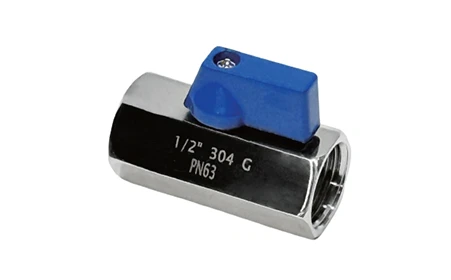
A Double Female Thread Mini Ball Valve is not a commodity item you buy by price alone. It sits in a critical spot, and once the system is filled, replacing it is expensive. Before you approve a sample or place a bulk order, use the checks below.
Start With the Installation Space
Measure the gap between the pipe and the cabinet wall, not just the pipe diameter. A standard ball valve may fit on paper, but the handle can hit a frame or another fitting. Compact ball valves are designed for this, but “compact” means different things to different suppliers.
Confirm the Size and Port Center
Check the L dimension and the thread size. Common sizes run from 1/8" to 1", with 1/4", 3/8", and 1/2" being the most requested for liquid cooling. If the valve is going into a manifold, confirm the port center distance as well as the thread.
Check Handle Clearance
A low torque mini ball valve helps, but you still need room to turn the handle. Ask for a 3D drawing or a sample with the actual handle. If the valve will be insulated, add that thickness to your clearance check.
Match the Valve to the Media and Temperature
Water is easy. Glycol is not. Many data center liquid cooling systems use up to 50% ethylene glycol or propylene glycol. The valve body, seats, and O-rings must be compatible with that chemistry over the full temperature range.
304 or 316L?
Both 304 and 316L stainless steel mini ball valves are common. 304 is usually enough for water and treated glycol. 316L gives more corrosion resistance when the fluid is more aggressive or when the system must meet stricter project specs.
Glycol Compatibility and Temperature
For a Double Female Thread Mini Ball Valve used in liquid cooling, look for a working range of -40°C to 120°C and PTFE seats with EPDM O-rings. If the supplier cannot explain how the seats behave in glycol, keep looking.
Do Not Ignore Thread Standards
Thread mismatch is one of the most common reasons a valve is returned. BSP and NPT look similar, but they do not seal the same way. The wrong pair can leak even with tape or sealant.
BSP, NPT, or Metric?
Tell the supplier which standard your fittings use. If you are exporting the finished equipment, you may need BSP for some markets and NPT for others. A good double female thread mini ball valve supplier should offer both and mark the thread clearly on the valve and the packaging.
Check the Thread Depth and Chamfer
A clean thread start saves installation time. Ask for a sample and thread it into your own fitting. If it binds after one or two turns, the thread may be out of spec.
Pressure Rating and Test Standard
PN10 is a common rating for this type of valve. It is suitable for many water and liquid cooling lines, but it is not a universal answer. Confirm the actual working pressure of your system, including pump surge.
What PN10 Really Means
PN10 indicates a nominal pressure of 10 bar at reference conditions. It does not mean the valve is rated for 10 bar at every temperature. Check the pressure-temperature curve.
Ask for Test Reports
The product page may list JB/T9092-1999 and GB/T12237-2021. Ask for the actual test report for the batch. A pressure test and a leak test should be standard, not an extra.
Sealing, Torque and Cleanliness
In a liquid cooling loop, a few drops of coolant can damage electronics. Sealing quality is not a detail; it is the main reason you choose a better valve.
PTFE Seats and EPDM O-Rings
PTFE seats provide low friction and good chemical resistance. EPDM O-rings handle water and glycol well. Together they support smooth operation and a reliable shut-off.
Degreased for Liquid Cooling
If the valve is going into a data center liquid cooling system, ask whether it is degreased. Oil or grease left from machining can contaminate the coolant and clog filters. A degreased mini ball valve is often a project requirement, not a nice-to-have.
Supplier Support and Customization
The valve itself is only part of the purchase. You also need a supplier who can answer technical questions, provide drawings, and keep lead times predictable.
OEM, MOQ and Lead Time
If you need your logo, custom packaging, or a specific handle color, ask early. MOQ and lead time vary by size and material. For this valve, a realistic sample lead time is often a few days to two weeks, depending on whether it is a standard size or a custom build.
Samples and Documentation
Before a bulk order, test a sample in your actual loop. Ask for material certificates, test reports, and installation instructions. This is especially important for OEM projects and distributor orders.
A Quick Checklist Before You Approve the PO
Here is a short list you can send to your engineering team:
- Size and thread standard confirmed with a sample fitting
- 304 or 316L selected for the media
- PN10 rating checked against working pressure and temperature
- PTFE seats and EPDM O-rings confirmed
- Degreased cleaning requested for liquid cooling
- Test report, drawing, and lead time confirmed
- OEM logo, packaging, and MOQ agreed
Final Thoughts
Buying a Double Female Thread Mini Ball Valve is not about finding the lowest price. It is about finding a valve that fits the space, matches the coolant, seals reliably, and comes from a supplier who supports you after the order. When you check size, thread, material, pressure, sealing, cleanliness, and support, you avoid the expensive mistakes that only show up after the system is running.
Have a Specific Project?
Have a CDU drain project, a rack cooling loop, or a manifold design that needs a compact stainless steel mini ball valve? Send us your size, thread standard, media, and working pressure. QINFENG can provide drawings, samples, and OEM support for your next Double Female Thread Mini Ball Valve order.