

 Jul 31,2026
When specifying components for a liquid cooling system, the ball valve is often overlooked—treated as a commodity rather than a critical decision point. Yet the material of that valve directly affects system reliability, maintenance frequency, and total cost of ownership over the life of the installation.
Most cooling loops run for years without interruption. The valve you install today will see thousands of actuations, continuous fluid exposure, and temperature cycling. Choose the wrong material, and you are not just replacing a valve—you are draining systems, scheduling downtime, and explaining delays to stakeholders.
So what actually differentiates a stainless steel ball valve from the alternatives? And why should you spec stainless over brass for liquid cooling applications?
Material Matters: Stainless Steel vs. Brass in Cooling Environments
Brass ball valves have been a staple in plumbing and HVAC for decades. They are machinable, cost-effective, and perform adequately in many residential and light commercial applications. For a closed-loop cooling system running treated water or glycol in a controlled indoor environment, brass can work.
But liquid cooling for data centers and industrial process systems is not a residential plumbing application. Coolant formulations vary, dissolved oxygen levels fluctuate, and systems often run 24/7/365 at elevated temperatures. Under these conditions, the limitations of brass become visible.
Brass contains copper and zinc. In the presence of certain coolants, dissolved oxygen, or minor impurities, brass is susceptible to dezincification—a form of corrosion where zinc leaches out, leaving behind a porous, weakened copper structure. The result? Pitting, reduced mechanical strength, and eventual leakage through the valve body or stem seals.
Stainless steel, particularly grades 304 and 316L, offers a fundamentally different corrosion profile. The chromium content forms a passive oxide layer that self-repairs when scratched, providing continuous protection in most cooling fluid environments. Grade 316L adds molybdenum, which enhances resistance to chloride-induced pitting—particularly relevant if your cooling water has higher than expected chloride levels.
What the Numbers Tell You About Long-Term Performance
The upfront cost difference between a brass and a stainless steel ball valve is real. Brass is cheaper to manufacture, and the price tag reflects that. But purchase price is not total cost.
A brass ball valve that begins to corrode after two or three years requires replacement. That means system shutdown, draining coolant, labor hours, and potential contamination of the loop during the swap. A stainless steel valve, properly specified, can last the life of the cooling system itself.
In liquid cooling applications where the fluid is deionized water, ethylene glycol, or propylene glycol mixtures, stainless steel maintains its integrity without degrading the fluid quality. Brass, by contrast, can introduce copper and zinc ions into the coolant over time—particularly in systems with slight pH shifts or elevated temperatures. Those ions can accelerate corrosion elsewhere in the loop or reduce the effectiveness of corrosion inhibitors.
For systems running at higher pressures, stainless steel also provides superior mechanical strength. The valve body and ball are more resistant to deformation under pressure, maintaining seal integrity and torque characteristics over a longer period.
Applications Where Stainless Steel Is the Clear Choice
Not every cooling application demands stainless steel. In low-pressure, low-temperature systems with stable, non-aggressive water chemistry, brass may serve adequately. But in the following scenarios, stainless steel is not optional—it is a requirement.
Data center liquid cooling is the most prominent example. CDUs (Coolant Distribution Units), manifolds, and rack-level connections operate continuously under demanding conditions. Coolant purity matters; any contamination from valve corrosion can affect heat transfer efficiency and increase the risk of blockages in cold plates or microchannel components.
A stainless steel ball valve in this environment provides reliable quarter-turn shut-off with minimal pressure drop, thanks to full-port designs that allow unrestricted flow. The material compatibility ensures that the valve does not become a source of system degradation over years of service.
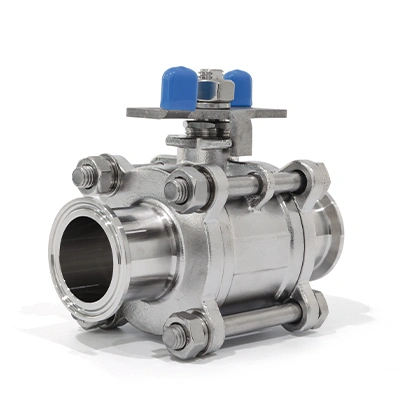
Industrial process cooling presents similar challenges. Chilled water systems, pump skids, and secondary cooling loops often see temperature cycling and variable flow rates. Stainless steel handles thermal expansion and contraction more predictably than brass, reducing the risk of seal wear or body cracking over time.
Outdoor or harsh environments are another clear case. If your cooling system includes any outdoor piping or equipment exposed to moisture, temperature extremes, or airborne contaminants, brass is a liability. Stainless steel's corrosion resistance makes it the appropriate choice for these conditions.
Beyond Material: What to Look for in a Quality Ball Valve
Material is the starting point, not the finish line. A stainless steel ball valve is only as good as its construction details.
Stem sealing deserves particular attention. Conventional ball valves can leak from both the stem and body joints simultaneously under abnormal conditions. Look for designs with multi-tier stem seals—three-tier configurations, for example, contain fluid within the sealing chamber even if the primary seal is compromised. This is a critical differentiator between commodity valves and engineered solutions.
Body construction also matters. An integrated forged body eliminates dead legs and external leakage paths, while a full-bore flow path ensures media passes linearly with no retention or cross-contamination. This design reduces pressure drop and keeps pump energy consumption in check.
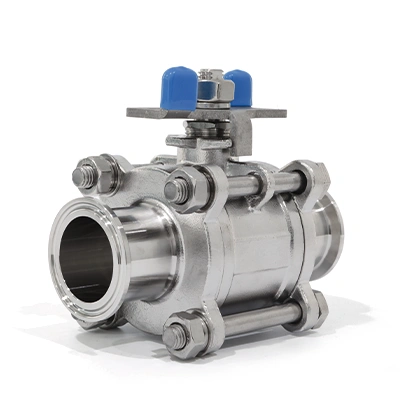
End connections should match your system requirements. Whether you need Tri-Clamp for sanitary applications, threaded connections for smaller lines, or welded ends for permanent installations, verify that the valve configuration aligns with your piping specifications.
Testing and quality assurance should not be an afterthought. Reputable suppliers perform 100% hydrostatic and seat leakage testing on every valve. Helium leak detection on stem seals and body joints provides an additional layer of verification—particularly important in systems where even minor leakage is unacceptable.
Making the Right Choice for Your System
Selecting a ball valve for liquid cooling is not about picking the cheapest option that fits the pipe size. It is about understanding your operating conditions—coolant chemistry, temperature range, pressure requirements, and expected service life—and choosing a valve that matches those demands.
Stainless steel costs more upfront. That is a fact. But in continuous-operation liquid cooling systems, the total cost of ownership tells a different story. Fewer replacements, less maintenance, zero corrosion-related downtime, and consistent performance over years of service make stainless steel the economically rational choice for most professional cooling applications.
Brass has its place. It is not the right material for data center cooling loops, high-purity process cooling, or any system where reliability and longevity are non-negotiable.
Have a Specific Cooling Application in Mind?
Whether you are designing a new CDU, upgrading an existing manifold, or specifying components for a rack-level cooling system, the material selection for your ball valve matters more than most people realize.
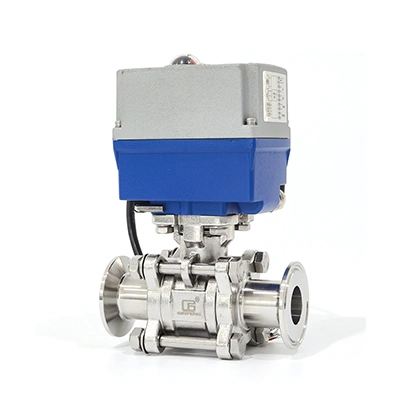
Our engineering team can help you evaluate your coolant chemistry, pressure requirements, and space constraints to recommend the right stainless steel ball valve configuration—whether you need a manual isolation valve, an electric actuated option, or a compact mini valve for tight installations.