

 Aug 12,2026
A leak in your piping system is never a small problem. By the time you notice a visible drip or a pressure drop on your gauge, the issue has already been developing for a while. For operations running flanged metal bellows in critical cooling loops, process lines, or thermal management systems, unplanned downtime is expensive — and so is unnecessary disassembly.
The instinct when a leak is suspected is often to shut down, drain the line, and pull the bellows assembly apart for inspection. But here is the reality: many leaks can be diagnosed without breaking a single flange connection. Understanding how to pinpoint the problem while the system remains intact saves time, reduces labor costs, and minimizes production interruptions.
So how do you actually diagnose leakage in a flanged metal bellows without dismantling the piping? Let us walk through the practical, non-invasive methods that work in the field.
Start With What You Can See
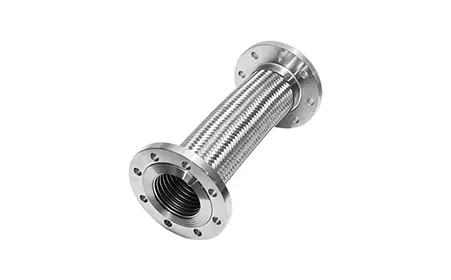
Before reaching for any specialized equipment, take a step back and look. Visual inspection remains one of the most underrated diagnostic tools for any flanged metal bellows expansion joint.
What to look for during a visual inspection:
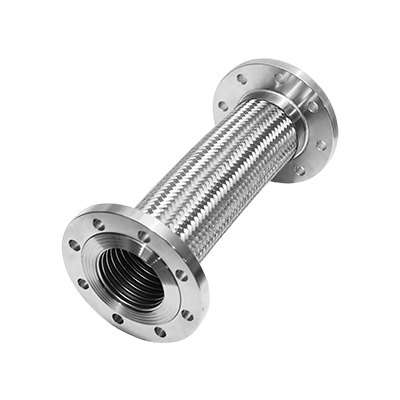
Walk the line and examine the bellows assembly carefully. Look for staining, discoloration, or corrosion trails around the convolutions, along the weld seams, and at the flange connections. These are telltale signs that media has been escaping — even if the leak is too small to produce a visible drip. Powder leakage, air leakage, or discoloration may be the first visible sign that something is wrong.
Pay attention to the bellows convolutions themselves. Are they evenly spaced? Any distortion, uneven convolution spacing, or visible deformation is a red flag. Fine cracks on the convolutions or pinholes may not be immediately obvious to the naked eye, but they are worth a closer look with a magnifying glass or borescope.
Check the flange bolting as well. Loose flange bolts or signs of gasket leakage around the flange faces are common culprits. If you see evidence of past leakage — staining, deposits, or corrosion trails — around the flange connections, that is your first clue.
The Soap Bubble Test: Simple but Effective
If visual inspection suggests a potential leak but you cannot pinpoint the exact location, the soap bubble test is the next logical step. It is inexpensive, requires no specialized training, and can be performed while the system remains pressurized.
How to perform a soap bubble test on a flanged metal bellows:
With the system still under pressure, apply a soapy water solution — or a commercially available leak detection fluid — to the suspect areas. Focus on the bellows convolutions, the weld seams where the bellows attaches to the flanges, and the flange gasket joints. If there is a leak, the escaping gas or fluid will create bubbles that are clearly visible.
For pneumatic systems or lines carrying gas, listen for hissing sounds while applying the solution. For liquid systems, you may need to wipe the area dry first and then observe carefully — bubbles will form as the liquid escapes through the breach.
This method is particularly useful for identifying pinhole leaks in the bellows wall or minor leaks at flange gasket joints. It is quick, reliable, and requires zero disassembly.
Pressure Decay Testing: Let the Numbers Tell the Story
When visual inspection and bubble testing are inconclusive, pressure decay testing offers a more quantitative approach. This method works by isolating a section of the piping that includes the flanged metal bellows, pressurizing it to a known level, and monitoring for pressure loss over a set period.
What pressure decay testing reveals:
A pressure drop indicates that the system is losing media somewhere. While this method does not pinpoint the exact leak location on its own, it confirms that a leak exists and gives you a sense of its severity. If the pressure holds steady, you can rule out a significant leak and look elsewhere for your system's performance issues.
For systems where the bellows assembly can be isolated from the rest of the line, this test is straightforward and highly informative.
Helium Leak Detection: The Gold Standard
For applications that demand the highest level of leak tightness — such as data center liquid cooling loops, semiconductor manufacturing, or nuclear applications — helium mass spectrometry is the preferred method.
How helium leak detection works on flanged metal bellows:
The bellows assembly is pressurized with helium gas, and a sniffer probe — or a mass spectrometer — is used to detect any helium escaping through the bellows wall, weld seams, or flange joints. Helium is used because its small molecular size allows it to pass through even microscopic leaks that other gases would not escape through.
Typical helium leak rate acceptance levels are exceptionally low — often ≤ 1×10⁻⁷ scc/sec. This level of sensitivity makes helium leak detection ideal for diagnosing very small leaks that would otherwise go undetected until they become major problems.
The test can be performed with the bellows in place, without dismantling the piping. For flanged connections, a leak detector sleeve can be placed over the flange joint to concentrate the sniffer probe's sampling area.
Ultrasonic and Acoustic Emission Methods
For systems that cannot be taken offline for pressure testing, ultrasonic leak detectors and acoustic emission monitoring offer non-invasive, in-service diagnostic options.
What these methods can do:
Ultrasonic leak detectors can identify the high-frequency sound generated by escaping gas or liquid from a distance of 50 feet or more. This makes them particularly useful for hard-to-reach installations or for scanning large sections of piping quickly.
Acoustic emission monitoring takes this a step further by providing continuous, real-time monitoring of metal pressure boundaries during operation. This method can detect the early stages of crack formation and fatigue in multilayer metal bellows, allowing you to address problems before they become leaks.
What to Do Once You Have Diagnosed the Leak
Once you have identified that a leak exists and, ideally, located its source, you have a decision to make. Not every leak requires immediate replacement of the entire flanged metal bellows assembly.
Your next steps:
If the leak is at the flange gasket joint, tightening the flange bolts — using a criss-cross pattern to ensure even pressure — may resolve the issue. If the gasket itself is worn or damaged, replacement may be necessary, but that can often be done without removing the bellows from the line.
If the leak is in the bellows convolutions or at the weld seam, however, the bellows itself has failed. In that case, replacement is the only option. But here is the key: you now know exactly what you are dealing with before you shut down the system. You can order the correct replacement flanged metal bellows expansion joint, schedule the downtime, and complete the repair efficiently — rather than tearing the system apart, diagnosing the problem, and then waiting for parts.
Summary
Diagnosing leakage in a flanged metal bellows does not have to mean dismantling your piping system. A systematic approach — starting with visual inspection, moving to soap bubble testing or pressure decay methods, and escalating to helium leak detection or ultrasonic monitoring when needed — can identify the problem with the assembly still in place.
What to take away:
- Visual inspection catches the early warning signs — staining, distortion, and uneven convolution spacing
- Soap bubble testing is quick, inexpensive, and works on pressurized systems
- Pressure decay testing confirms whether a leak exists and indicates its severity
- Helium leak detection provides the highest sensitivity for critical applications
- Ultrasonic and acoustic emission methods allow in-service monitoring without shutting down
Need Help Diagnosing a Leak in Your Flanged Metal Bellows?
Every piping system is different, and the right diagnostic approach depends on your operating pressure, media type, and accessibility constraints. Whether you are dealing with a suspected leak in a liquid cooling loop or a process line, our team can help you identify the problem and source the right replacement flanged metal bellows expansion joint — with the correct flange drilling, material specification, and pressure rating for your application.