

 Jun 15,2026
When Every Day of Downtime Costs Millions
The shift to liquid cooling is no longer a question of “if” but “how fast.” With AI workloads pushing rack densities from 8kW to 40kW and beyond in just a few years, traditional on-site piping fabrication has become a bottleneck. Data center operators report that field welding for secondary fluid networks can take weeks, introduce quality risks, and tie up skilled labor that is already in short supply. Against this backdrop, prefabricated and modular cooling infrastructure is gaining traction as a faster, more predictable alternative.
Shifting Welding to the Factory, Not the Data Hall
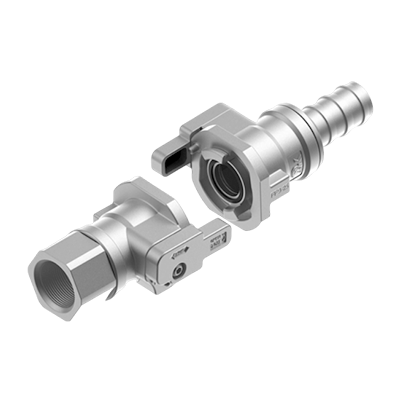
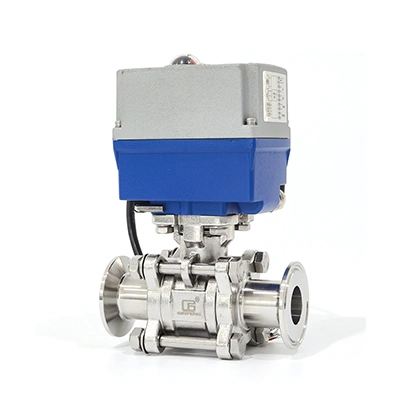
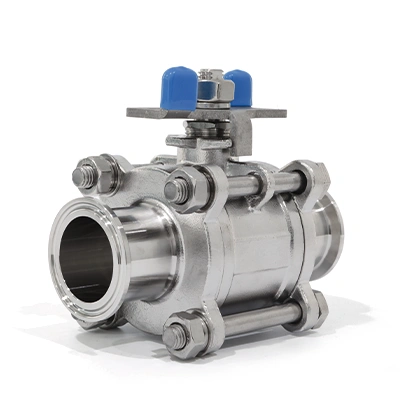
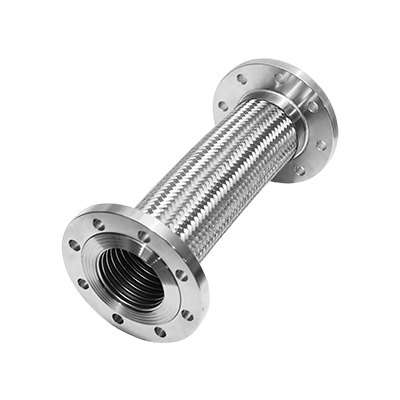
Industry players like Vertiv, Flex and LG, and ZTE have all announced prefabricated modular solutions to accelerate liquid cooling deployment. In July 2025, ZTE launched its AIDC Prefabricated Container Solution, reporting that projects can be delivered in as fast as seven months — nearly 40% shorter than traditional construction methods. A key enabler behind these gains is shifting the majority of piping fabrication from the data center floor to factory-controlled environments, where quality is consistent and multiple modules can be built in parallel. The same principle applies to the component level: when valves, pipe fittings, quick couplings, bellows and distribution pipes are pre-assembled into modules, on-site work reduces to standardized bolt-and-clamp connections.
What Operators Gain from Prefabricated Valve and Piping Assemblies
Faster deployment. Reduced on-site work means lower labor costs, shorter schedules and faster time-to-revenue.
Quality assurance. Factory welding and assembly follow repeatable processes with proper testing, including helium leak detection and pressure verification.
Lower execution risk. Pre-simulation at the factory identifies interference or fit-up issues before components ever leave the plant, avoiding costly rework in the data center.
Scalability. Modular designs make it easier to expand cooling capacity as AI clusters grow, without disruptive re-piping.
Tune In to Understand How Factory Prefabrication Is Transforming Liquid Cooling Projects
For a deeper discussion, we recommend listening to the industry podcast "Keeping IT Cool | Liquid 2026" by Data Center Dynamics. One episode features operators who have already deployed liquid cooling and share their experiences on managing fluid distribution and risk, navigating emerging standards, and applying liquid cooling to both new-build and retrofit projects. The episode also explores how modularization and prefabrication are becoming core strategies as facilities grow larger and demand accelerates.